Top CRM Solutions for WooCommerce (15 Options Compared)
If you run an online store, you probably know the feeling of watching revenue slip away without knowing why. You open your dashboard and see a list of order numbers. You do not see the people behind those orders.
Because of this blind spot, store owners eventually start looking for the top CRM solutions for WooCommerce. They need a tool to organize customer data, predict buying habits, and stop revenue leaks.
The problem is that the software market is incredibly crowded. Cloud platforms charge per contact, meaning your bill goes up every time your list grows. Native WordPress plugins keep your data on your server but usually lack deep analytics. General business tools were built for corporate sales teams, not for understanding online retail buyers.
I researched 15 different tools to help you choose. I checked every price, rating, and feature directly on each official website as of June 2026. This guide breaks down the facts so you can find the right fit for your store.
How I Evaluated These Options
Before you pick a tool, you should look at five specific details. These matter significantly more than long feature lists.
- Integration depth. Does the software read your order data directly from your WordPress database? Or does it rely on a clunky third party connector? Native integration usually means fewer broken connections.
- Pricing model. Paying per contact is a trap. A store with 30,000 contacts can end up paying thousands of dollars a year. Flat rate, per email, and free models are infinitely easier to predict.
- Automation capability. Recovering abandoned carts alone can bring back 5 to 15 percent of lost revenue. Win back campaigns also matter heavily for keeping customers active.
- Analytics and predictions. Most tools just report what already happened. The best tools tell you what will happen next. Features like churn risk calculations separate basic tools from genuinely powerful ones.
- Data ownership. Self hosted tools keep your information on your own server. Cloud tools sync your data to external servers, which completely changes how you handle privacy.
Comparison Table: 15 Tools at a Glance
This table gives you a quick look at the top CRM solutions for WooCommerce before you read the detailed sections. I verified every entry against each tool’s official site.
| CRM | Architecture | Starting Price | Pricing Model | Key Strength |
|---|---|---|---|---|
| ActiveCampaign | Cloud SaaS | $15/mo | Per contact | Advanced automation |
| AutomateWoo | Native WP | $119/yr | Flat annual | Native store triggers |
| Brevo | Cloud SaaS | $9/mo | Per email volume | Multi channel |
| CRMlytics | Native WP | Free | Free | Predictive analytics |
| Drip | Cloud SaaS | $39/mo | Per contact | Visual workflows |
| FluentCRM | Native WP | $129/yr | Flat annual | Unlimited contacts |
| FunnelKit Automations | Native WP | $99.50/yr | Flat annual | Cart recovery |
| Groundhogg | Native WP | $20/mo | Flat monthly | Flat rate scale |
| HubSpot CRM | Cloud SaaS | Free | Per seat | B2B sales pipelines |
| Jetpack CRM | Native WP | Free | Monthly bundle | Basic invoicing |
| Klaviyo | Cloud SaaS | Free | Per contact | Revenue tracking |
| MailPoet | Native WP | Free | Monthly tier | Simple newsletters |
| Metorik | Cloud SaaS | $25/mo | Per order volume | Profit tracking |
| Omnisend | Cloud SaaS | Free | Per contact | Pre built workflows |
| Zoho CRM | Cloud SaaS | Free | Per user | Corporate pipelines |
The 15 Options: Detailed Breakdowns
Each entry in this guide to the top CRM solutions for WooCommerce includes verified data.
1. ActiveCampaign
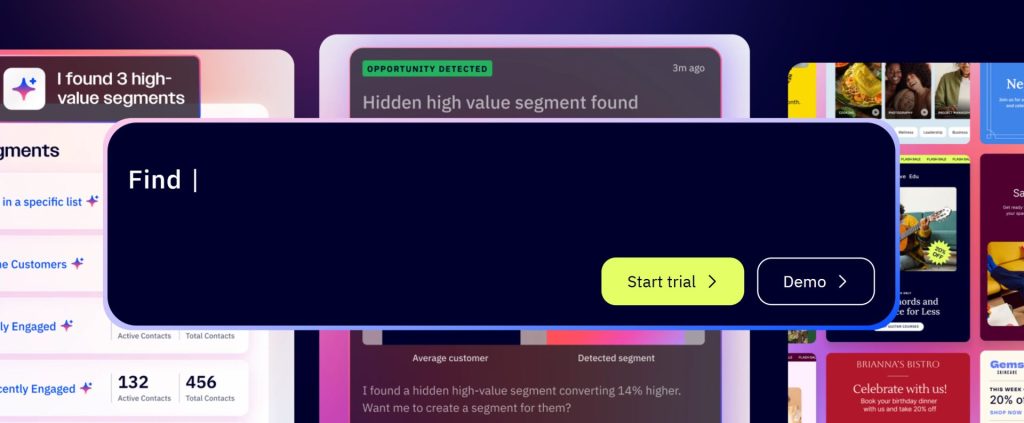
ActiveCampaign sits in a weird middle ground, but a good one. It holds a 4.5 star rating on G2 and packs email marketing, automation workflows, and a built in system with sales pipelines into one tool. The visual automation builder supports conditional branching and split paths that few competitors match.
The integration comes through an official plugin that syncs customer data and order history. You can easily build abandoned cart recovery and win back campaigns through their drag and drop builder. Deal pipelines unlock on higher pricing tiers. Watch out for their billing rules, though. ActiveCampaign charges for all contacts. This will inflate your bill if you do not clean your list regularly. Pricing starts at $15 per month for 1,000 contacts. Visit ActiveCampaign.
2. AutomateWoo
AutomateWoo is an official marketing automation extension. Over 30,000 stores use it, and for good reason. It has more than 190 specific triggers for building automated workflows. You can build flows based on cart abandonment, subscription renewals, membership changes, and purchase history. It even includes an automatic VIP program that upgrades customers based on spend thresholds.
The catch? AutomateWoo does not have a drag and drop email builder. You write emails using the standard WordPress editor. It also skips contact profiles entirely on its own. Pricing is a flat $119 per year. Visit AutomateWoo.
3. Brevo
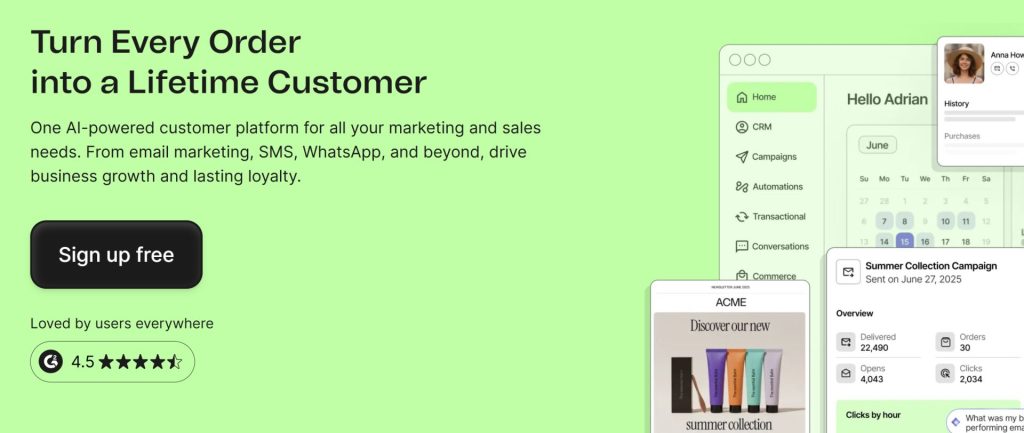
Brevo relies on a completely different pricing model. Instead of charging per contact, they charge per email sent. This makes it significantly cheaper if you have a massive list that does not get emailed every single day. Brevo holds a 4.5 star rating on G2.
It bundles email, SMS, WhatsApp, and live chat into one dashboard. The integration syncs contacts, orders, and products in real time. The Professional plan adds customer segmentation and product recommendations. Be aware that the free plan forces Brevo branding on all emails. Pricing starts at $9 per month for 5,000 emails. Visit Brevo.
4. CRMlytics
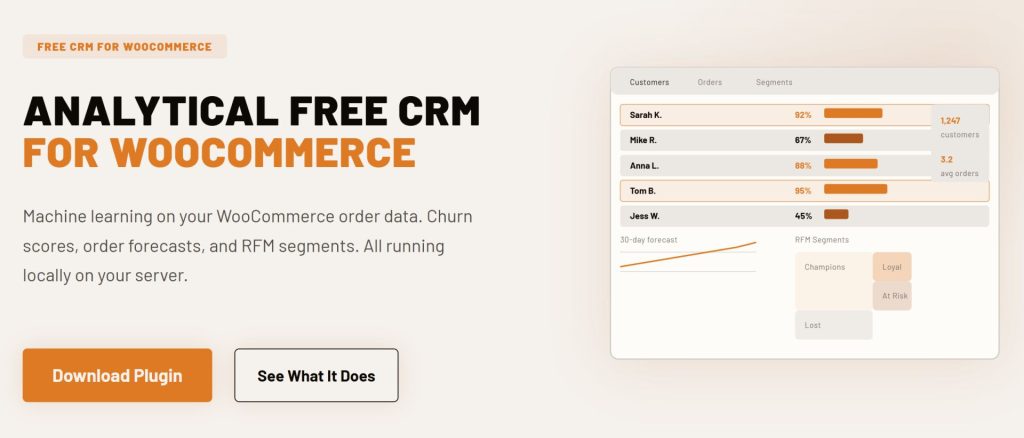
CRMlytics is a free native WordPress analytical tool. Instead of focusing on email automation workflows, it runs predictive formulas on your order data to calculate a health score for every single customer. If someone drops below 40, they are at serious risk of leaving. It also predicts how many orders each customer will place in the next 30, 90, and 180 days.
Customers are grouped into segments like Champions, Loyal, At Risk, and Lost automatically. You can build custom segments by stacking rules based on order count, average order value, and purchase dates. Everything runs strictly on your own server. There are no connection limits, no cloud sync, and absolutely no monthly fees. Visit CRMlytics.
5. Drip
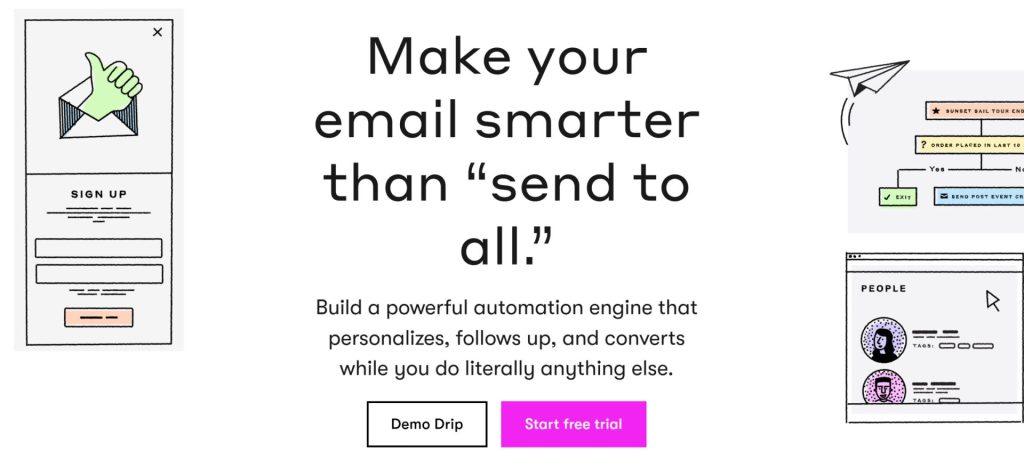
Drip is a marketing automation platform built specifically for retail stores, holding a 4.4 star rating on G2. The visual workflow builder is easily Drip’s strongest feature. You can map out automation sequences with triggers based on purchase behavior, browsing activity, and email engagement.
All paid plans include every feature. You never have to pay more just to unlock segmentation or split testing. The integration syncs customer data, order history, and cart activity seamlessly. Onsite campaigns like pop ups are included by default. The entry price of $39 per month for 2,500 contacts can feel a bit steep for brand new stores, though. Visit Drip.
6. FluentCRM
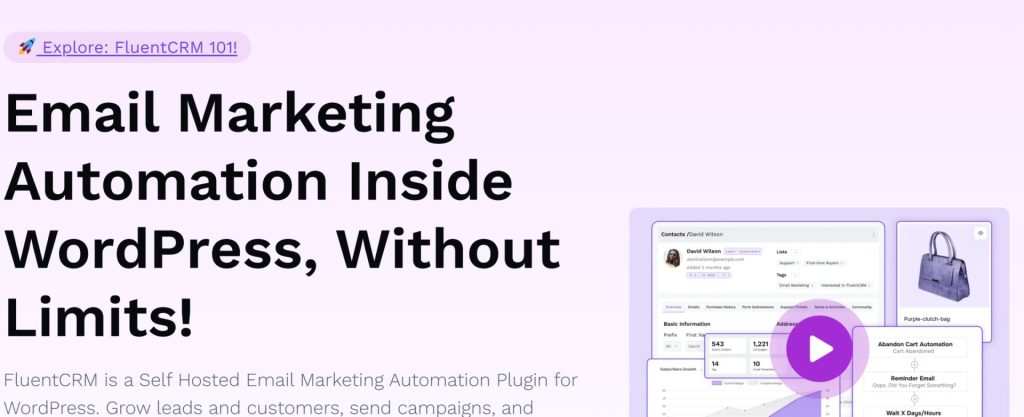
FluentCRM is a massively popular self hosted option. Over 80,000 sites run it, giving it a 4.8 out of 5 rating on WordPress.org. The visual automation builder handles conditional branching and time delays beautifully.
However, the free version does not sync store customers or purchase data. You absolutely need the Pro version to get automatic customer sync, segmentation by purchased products, order count, total spent, and lifetime value. Triggers fire reliably on purchase events and refunds. The pricing is a flat annual fee with zero contact limits. Pro pricing starts at $129 per year for one site. Visit FluentCRM.
7. FunnelKit Automations
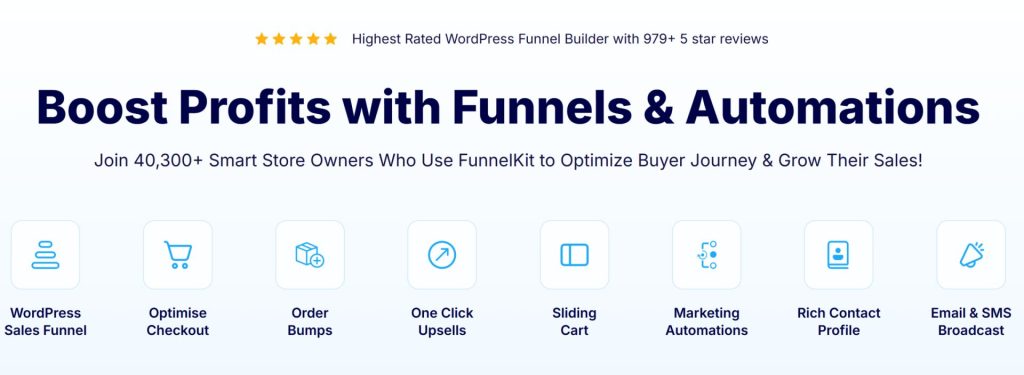
FunnelKit Automations was built specifically for WordPress stores. It boasts a 4.9 out of 5 rating on WordPress.org. Abandoned cart recovery, post purchase upsell offers, and win back campaigns work perfectly out of the box.
The visual workflow builder supports branching logic based on order value, product category, and customer behavior. Contact profiles show purchase history, lifetime value, and order frequency clearly. The free version gives you basic triggers like cart abandoned and order created. The Pro version unlocks broadcast campaigns and SMS marketing. Pro pricing starts at $99.50 per year. Visit FunnelKit Automations.
8. Groundhogg
Groundhogg is a self hosted tool with flat rate pricing that refuses to punish you for growing. It has a 4.9 out of 5 rating on WordPress.org. The Flow Editor uses drag and drop triggers and conditional branching. It uniquely includes a sales pipeline with deal tracking.
The store integration requires the Pro plan at $50 per month. This plan gives you store triggers, SMS, and WhatsApp messaging. The free core handles basic contact management but skips the ecommerce triggers entirely. Groundhogg grandfathers pricing, meaning your rate stays exactly the same as long as you renew. Visit Groundhogg.

9. HubSpot CRM
HubSpot has a 4.4 star rating on G2. The free tier is generous, including unlimited users and up to 1,000 contacts. You get deal pipelines, meeting scheduling, and email tracking at zero cost.
HubSpot does not have a native store integration built in. You will need a third party connector plugin to sync your data. The Sales Hub Professional tier adds email sequences and workflow automation but costs $100 per seat per month with a $1,500 setup fee. HubSpot is incredibly powerful but feels overpriced for smaller retail stores. Visit HubSpot CRM.
10. Jetpack CRM
Jetpack CRM comes directly from Automattic. It holds a 4.3 out of 5 rating on WordPress.org. It focuses heavily on being a practical customer manager rather than a marketing automation platform.
The free core includes a sync module that pulls orders, customers, and transactions into contact profiles automatically. You also get invoicing, quote generation, and a client portal where customers can view their bills. Paid bundles add extra payment sync options and advanced segments. The Freelancer bundle costs $11 per month. Visit Jetpack CRM.

11. Klaviyo
Klaviyo dominates the email and SMS marketing space for a reason. It has a 4.6 out of 5 rating on G2. Predictive analytics and revenue tracking are where Klaviyo completely outshines the competition. It calculates predicted customer lifetime value, churn risk, and next purchase date accurately.
The integration syncs order data, abandoned carts, and customer profiles natively. Pre built flows cover welcome series, abandoned cart, post purchase, and win back campaigns flawlessly. Klaviyo charges by contact count. At 10,000 profiles, the email plan costs about $150 per month. They charge for all profiles, including unsubscribed contacts. Visit Klaviyo.

12. MailPoet
MailPoet is a WordPress native email marketing plugin with a 4.4 out of 5 rating on WordPress.org. It is owned by Automattic, ensuring a tight integration. You can send newsletters and manage subscribers directly from your WordPress dashboard.
The store integration handles abandoned cart recovery emails, first purchase follow ups, and automated post purchase sequences easily. You can segment customers by total spent and number of orders. The built in MailPoet Sending Service helps your emails actually reach the inbox. The free plan covers up to 1,000 subscribers. Paid plans start at $10 per month. Visit MailPoet.
13. Metorik
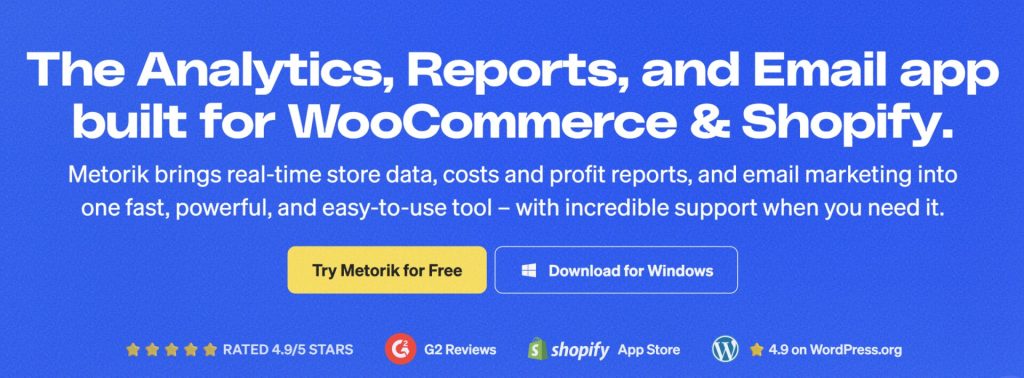
Metorik is a fantastic ecommerce analytics platform with a 4.9 out of 5 rating on G2. It is not a traditional email sending tool. It operates as an analytics tool first with an email add on called Metorik Engage.
Metorik gives you pre built reports covering sales, customers, subscriptions, costs, and profit. It provides segmentation filters and profit tracking so you see true margins per product instantly. The Engage add on lets you send automated emails based on your custom segments. Pricing relies on monthly order volume, not contact count, starting at $25 per month. Visit Metorik.

14. Omnisend
Omnisend is an omnichannel marketing platform holding a 4.6 out of 5 rating on G2. The platform supports email, SMS, and web push notifications in a single, clean dashboard.
Pre built automation workflows cover welcome series, abandoned cart recovery, browse abandonment, and post purchase follow ups without needing a developer. The segmentation engine supports conditions based strictly on purchase behavior. The free plan supports up to 250 contacts and 500 emails per month. The Standard plan starts at $16 per month for 500 contacts. Visit Omnisend.

15. Zoho CRM
Zoho CRM holds a 4.3 star rating on G2. The free tier supports up to 3 users with core features like contact management, deal pipelines, and task tracking.
Paid plans add sales automation and custom fields. For store integration, you absolutely need a third party connector plugin. Be careful with the free tier, as it has strict connection limits of 5,000 calls per day. Standard pricing starts at $14 per user per month. This tool really works best for B2B stores that need a traditional sales pipeline. Visit Zoho CRM.
How Pricing Models Change Your Costs
The starting price on a pricing page rarely reflects what you actually pay after your store grows. Understanding the pricing model matters significantly more than the monthly number. A tool that costs $15 a month but charges per contact can easily hit $500 a month once you have 15,000 customers. A flat $129 per year tool stays exactly at $129.
Per contact pricing means you pay based on how many people are in your database. A store with 10,000 customers on Klaviyo pays about $150 per month. Your bill grows as your list grows, even if you never email half of those people.
Flat rate pricing means your cost stays the same no matter how many customers you have. These are predictable, stress free options as you scale. Per email pricing means you pay strictly for the volume of emails you send. If you have 50,000 contacts but only email once a month, you pay very little.
How to Choose the Right Tool for Your Store
Here is how you can find the right tool among the top CRM solutions for WooCommerce based on your specific situation.
- If you mainly need email automation. Start with FluentCRM or MailPoet. Both are self hosted, have free tiers, and handle email sequences reliably.
- If abandoned carts are costing you money. FunnelKit Automations recovers lost sales incredibly well at $99.50 per year. Omnisend is a strong cloud based alternative with excellent browse abandonment tracking.
- If you want predictive analytics without paying enterprise prices. CRMlytics is the free option that gives you churn prediction, RFM scoring, and order forecasts instantly.
- If you need a sales pipeline for B2B. ActiveCampaign gives you marketing automation plus deal pipelines. HubSpot does this at a higher price but with a better interface.
- If budget is your biggest constraint. CRMlytics and Jetpack CRM are completely free at the core level. Brevo per email pricing saves massive amounts of money for large lists.
Final Thoughts
The space for top CRM solutions for WooCommerce has shifted radically over the last few years. Today, self hosted plugins compete toe to toe with expensive cloud platforms. The main differentiator today is predictive analytics. Most tools can send emails. Very few can look at your data and tell you which customers are about to leave and when they will actually order again.
My honest advice is not to try solving every problem with a single tool. Many successful stores use two tools together perfectly. Pair CRMlytics with FunnelKit. You use CRMlytics to figure out exactly who needs attention based on the data. Then you use FunnelKit to send the targeted emails. This combination is highly cost effective and dramatically improves your targeting.
Start with something free. Test it out. Upgrade only when you hit a wall and know exactly what you need. That is the smartest way to grow your store safely.